
AiCenna Digital Twin: How Founding Members Shape the Future of Personalized Healthcare
Healthcare is at a turning point. For decades, medicine has been reactive—treating illness after it appears. But the future belongs to prevention, prediction, and personalization. AiCenna Digital Twin, a subsidiary of Elixem Holding, is leading this transformation by combining biosensing, genomics, and AI analytics into a powerful digital twin platform. With a planned 2026 launch, AiCenna is inviting visionary investors and early adopters to become founding members—a role that offers both financial upside and the chance to shape the next era of healthcare. Why Digital Twins Matter in Healthcare Digital twin technology creates a virtual replica of a patient’s biology, continuously updated with real‑time data from biosensors, lab results, and genomic insights. This allows physicians and patients to simulate outcomes, test interventions, and predict risks before they manifest. Imagine knowing how your body will respond to a treatment before taking it—or preventing chronic disease years before symptoms appear. AiCenna’s platform is designed to make this vision a reality. By integrating AI‑driven analytics with clinical expertise, the company is building a system that empowers individuals, providers, and insurers to move from reactive care to proactive health management. The Value of Becoming a Founding Member Founding members are not just investors—they are partners in shaping a healthcare revolution. Here’s what makes this opportunity unique: A Market Ready for Disruption The global digital health market is projected to exceed $650 billion by 2026, with preventive and personalized medicine driving much of that growth. Chronic diseases already account for more than 70% of healthcare costs worldwide, and traditional systems are struggling to keep up. AiCenna’s Digital Twin platform directly addresses this challenge by: For investors, this means entering a market with both massive demand and clear scalability. Founders as Catalysts for Innovation Becoming a founding member is more than a financial decision—it’s a chance to influence the trajectory of healthcare innovation. Founders will be part of a select group shaping: By joining early, founding members help ensure AiCenna’s platform is not only technologically advanced but also socially responsible and globally scalable. The Road to 2026 AiCenna’s roadmap is clear and ambitious: Each milestone represents an opportunity for founding members to see their investment grow in both financial and societal value. Why Now Is the Time to Act Opportunities to become a founding member are limited by design. AiCenna is building a core community of early supporters who will share in the platform’s growth and recognition. By joining today, investors secure: Join the Movement The future of healthcare will not be built by passive observers—it will be shaped by those bold enough to act early. AiCenna is offering a rare chance to be part of this transformation, not just as an investor, but as a founding member of a movement. Visit AiCenna’s ChainRaise page today to learn more, explore the details of the regulated crowdfunding campaign, and secure your place in the future of personalized healthcare.
AiCenna at the Global Health Exhibition 2025 in Riyadh: Pioneering the Future of Digital Health

From October 27–30, 2025, AiCenna will proudly participate in the Global Health Exhibition at the Riyadh Exhibition and Convention Center in Malham. This prestigious event brings together innovators, policymakers, and healthcare leaders from around the world to shape the future of medicine. Representing AiCenna at this global stage are our CEO, Dr. Salman Gilani, and CFO, Mobin Saulat—two visionary leaders driving our mission to redefine healthcare through biosensing, AI analytics, genomics, and digital twin simulations. Their presence underscores AiCenna’s commitment to advancing proactive, personalized, and predictive healthcare solutions. The Vision Behind AiCenna AiCenna was founded with a bold mission: to move healthcare beyond reactive treatment and into a new era of preventive, data-driven, and patient-centered care. At the heart of our platform is the AiCenna Digital Twin—a revolutionary system that integrates: This convergence of technologies empowers patients, clinicians, insurers, and researchers alike to make smarter, faster, and more personalized healthcare decisions. Leadership at the Helm Dr. Salman Gilani – CEO Dr. Gilani brings a unique blend of medical expertise and entrepreneurial vision. His leadership ensures AiCenna remains rooted in clinical realities while pushing the boundaries of what’s possible with AI and digital health. At the Riyadh exhibition, Dr. Gilani will highlight how AiCenna’s MedAI Studio enables clinicians to build, test, and deploy AI models in real time—bridging the gap between research and patient care. Mobin Saulat – CFO With decades of financial and operational leadership, Mobin Saulat ensures AiCenna’s growth is both sustainable and scalable. His stewardship has positioned AiCenna as an attractive opportunity for investors, with a payback period of under three years on a setup cost of USD 10M. At the exhibition, he will engage with global partners and investors, showcasing AiCenna’s multi-tier SaaS model, licensing opportunities, and outcome-based pricing strategies. Together, Dr. Gilani and Mr. Saulat embody AiCenna’s dual focus: clinical innovation and financial sustainability. What We’re Building According to our ChainRaise profile, AiCenna is more than a health-tech company—it’s a platform for the future of medicine. Key Features of the AiCenna Digital Twin: This holistic approach positions AiCenna as a regulation-ready, API-friendly, and scalable solution for hospitals, insurers, researchers, and consumers. Why It Matters The global digital health market is projected to reach USD 946 billion by 2030, while the digital twin sector is growing at a 25.9% CAGR. AiCenna is uniquely positioned at the intersection of these two booming industries. Our platform addresses critical challenges in healthcare: By solving these pain points, AiCenna is not just building a product—it’s building the infrastructure for the future of healthcare. The Future of AiCenna Looking ahead, AiCenna is focused on: Our roadmap is clear: to become the world’s leading digital twin health platform, transforming how healthcare is delivered, financed, and experienced. Why Become a Founding Member of AiCenna? Joining AiCenna as a founding member is more than an investment—it’s a chance to shape the future of healthcare. Benefits of Founding Membership: By becoming a founding member, you’re not just supporting a company—you’re supporting a movement to redefine healthcare for billions worldwide. AiCenna at Riyadh: A Global Stage The Global Health Exhibition in Riyadh is the perfect stage for AiCenna to showcase its vision. With leaders like Dr. Salman Gilani and Mobin Saulat engaging with global stakeholders, AiCenna is poised to: This event is not just about visibility—it’s about building the future of healthcare together. Conclusion AiCenna stands at the forefront of a healthcare revolution. By combining biosensing, AI, genomics, and digital twin simulations, we are creating a platform that is smarter, faster, and more personal than anything before. As we step onto the global stage in Riyadh, we invite clinicians, investors, and innovators to join us. Together, we can build a healthcare system that doesn’t just treat illness but predicts, prevents, and personalizes care for every individual. Becoming a founding member of AiCenna means becoming part of this transformation. The future of healthcare is here, and it starts with us. Register at aicenna.com/contact or become a founding member now by visiting https://aicenna.chainraise.io
How Doctors Balance Empathy with Evidence-Based Medicine
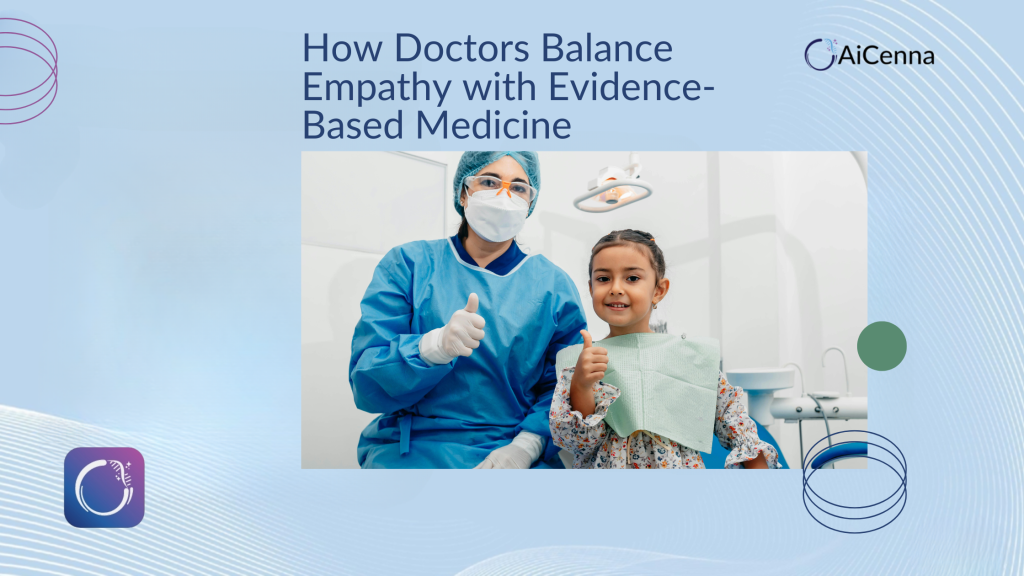
Medicine is both a science and an art. While evidence-based practice provides doctors with guidelines rooted in rigorous studies, empathy ensures that patients feel seen, heard, and cared for. Balancing these two dimensions is often the hardest — and most rewarding — part of being a physician. The Rise of Evidence-Based Medicine Evidence-based medicine (EBM) emerged to improve consistency in care by relying on high-quality research, clinical trials, and meta-analyses. Rather than decisions being guided solely by tradition or individual physician opinion, EBM provides a framework that emphasizes outcomes and safety. For instance, guidelines on managing hypertension are derived from decades of randomized controlled trials. Similarly, antibiotic stewardship programs are built on evidence showing how misuse accelerates resistance. Where Empathy Fits In But patients are not statistics. They bring individual fears, cultural backgrounds, and unique life circumstances to every clinical encounter. A doctor prescribing the most scientifically validated treatment may still fail if the patient doesn’t feel understood or if the regimen doesn’t fit their lifestyle. Empathy translates complex science into human care. It acknowledges the patient who can’t afford a brand-name drug, the single mother who can’t prioritize her own physical therapy, or the elderly man who fears losing independence more than facing side effects. When Evidence and Empathy Clash Sometimes evidence and empathy appear to diverge. Consider cancer treatment: clinical data may suggest aggressive chemotherapy as the best chance for survival, but a patient may value quality of life over a few more months. Here, empathy ensures the doctor respects patient autonomy. The Doctor’s Role as Interpreter Doctors are ultimately interpreters of science. They read journals, analyze trial outcomes, and evaluate guidelines — then translate them into language that patients can relate to. Empathy bridges the gap between data and lived experience. Training for Both Skills Medical education increasingly emphasizes communication skills and shared decision-making alongside scientific rigor. Empathy is no longer seen as “soft” medicine, but as a measurable contributor to adherence, recovery, and satisfaction. Modern health technology platforms like AiCenna help strengthen this bridge, giving doctors real-time insights that make conversations more personalized without losing sight of the evidence. Conclusion Balancing empathy and evidence is not an either/or equation. It is about blending data-driven recommendations with the human touch, ensuring care is both effective and compassionate.
How Doctors Read Lab Results: More Than Just Numbers
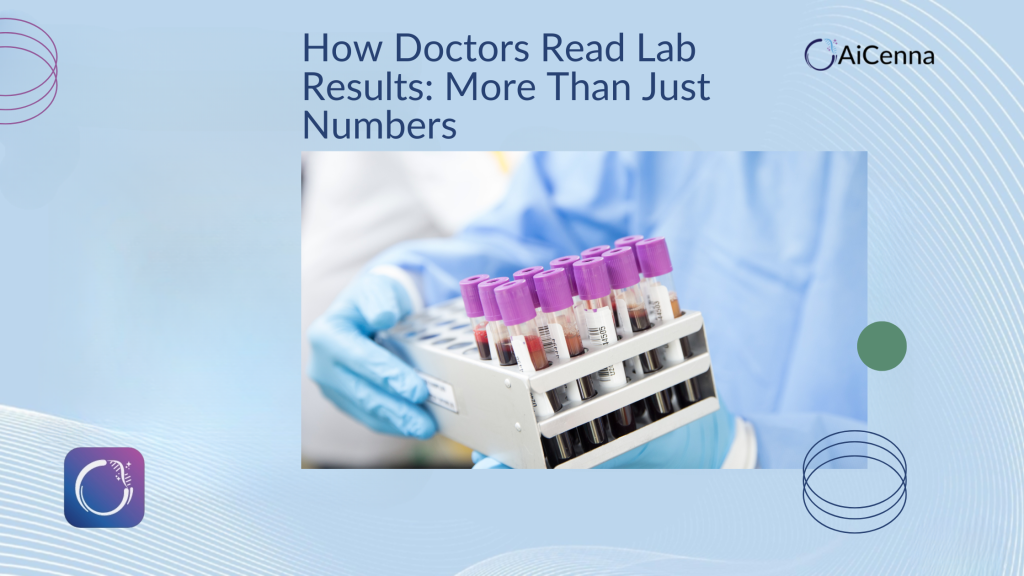
When patients get their lab results, the first instinct is often to scan for anything labeled “high” or “low.” But for doctors, interpreting these numbers goes far beyond red flags on a printout. Lab values are part of a much bigger picture—your overall health, medical history, and symptoms. Context Matters For example, a slightly elevated cholesterol reading may not be alarming if the patient has no risk factors for heart disease. On the other hand, the same result could raise concern in someone with a family history of cardiac issues. Similarly, lab ranges are not rigid cutoffs; they represent averages, and individual patients may fall outside them without necessarily being unhealthy. Patterns Over Time Doctors rarely look at a single test in isolation. Instead, they compare values over time. A gradual rise in blood sugar over several months, even if still “normal,” can signal early diabetes risk. The trajectory often matters more than the number itself. The Human Factor Doctors also integrate lab results with physical exams and patient-reported symptoms. For instance, a normal thyroid test might not rule out thyroid disease if the patient shows consistent fatigue, hair loss, and other warning signs. Medicine requires blending objective data with clinical judgment. Why It Matters Understanding this process can help patients avoid panic over isolated results or false reassurance from “normal” readings. It’s about recognizing that lab values are clues, not verdicts. Where AiCenna Fits In AI-driven platforms like AiCenna are being developed to assist doctors in analyzing lab results more efficiently by spotting subtle patterns and trends. While no technology replaces a physician’s judgment, solutions like AiCenna enhance the ability to connect numbers with context—helping ensure patients get the most accurate and timely care.
How to Prepare for Your First Specialist Appointment: A Doctor’s Guide

Being referred to a medical specialist can bring both relief and anxiety. Relief that you’re getting advanced care, and anxiety about the unknown. As doctors, we encourage patients to see these visits as opportunities for deeper understanding and treatment. Proper preparation can make the experience more productive and less stressful. 1. Gather Your Medical Records Bring prior lab reports, imaging results, and a list of current medications. Having complete information allows the specialist to make an accurate assessment without repeating unnecessary tests. 2. Write Down Symptoms and Concerns Specialist appointments can be brief. Documenting your symptoms, their duration, and any triggers ensures you don’t forget important details during the consultation. 3. Know Your Family History Many conditions—such as cardiovascular disease, cancer, and autoimmune disorders—have genetic components. A clear family history helps the specialist evaluate risks more effectively. 4. Prepare Questions in Advance From “What are my treatment options?” to “What lifestyle changes would help my condition?”—asking thoughtful questions empowers you to take ownership of your care. 5. Bring a Companion (if needed) A trusted friend or family member can provide support, take notes, and help recall details after the appointment. 6. Manage Expectations Specialists often focus on one organ system. They may request more tests or collaborate with other doctors. Patience is essential—complex conditions take time to fully evaluate. A well-prepared patient makes the most of every consultation. By approaching appointments proactively, you improve both understanding and outcomes. AiCenna enhances this process by streamlining medical data sharing, ensuring specialists have the right information at the right time.
The Ethics of Modern Medicine: How Digital Health Is Changing Patient Care
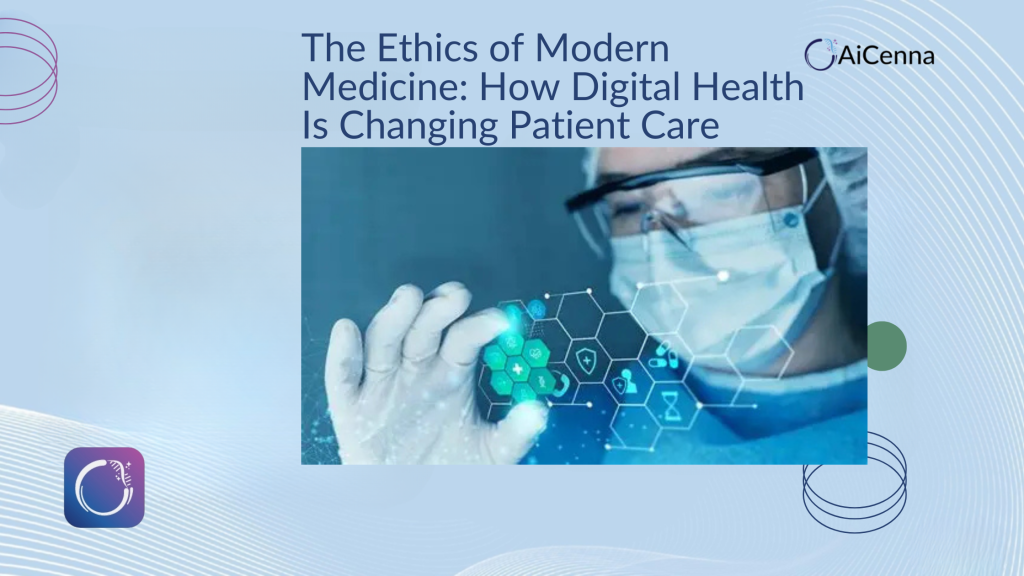
Medicine has always been grounded in ethics: Principles of doing good, avoiding harm, and respecting patients. But the digital transformation of healthcare brings new challenges that physicians, patients, and policymakers must navigate. Patient Privacy and Data Security With electronic health records, wearable devices, and telehealth, sensitive data is now digitized. While this enables continuity of care, it raises concerns about breaches and misuse. AI and Decision-Making Artificial intelligence is increasingly used in diagnostics, drug discovery, and treatment planning. But who is responsible if an AI-assisted decision leads to harm? Doctors must balance technology with human judgment. Health Inequality Digital health promises wider access, but not everyone has equal connectivity or digital literacy. This risks widening gaps between urban and rural, wealthy and underprivileged populations. Consent and Transparency Patients must fully understand how their data is used. Transparency about algorithms, limitations, and potential conflicts of interest is essential for maintaining trust. Physician-Patient Relationship While digital tools improve efficiency, they must not replace the human touch. Empathy, listening, and personal connection remain at the heart of medicine. Ethical medicine in the digital age requires constant reflection, adaptation, and accountability. Platforms like AiCenna are being designed to support these values by enabling safer, more transparent use of health data.