
Gene Expression Shaped by Lifestyle: Epigenetics in Preventive Care
Introduction For decades, genetics was seen as destiny. If you carried a gene for a disease, the assumption was that illness was inevitable. But the rise of epigenetics — the study of how behaviors and environment influence gene activity without altering DNA sequence — has transformed that view. Epigenetics shows that while we cannot change the genes we inherit, we can influence how those genes are expressed. Lifestyle factors such as diet, exercise, stress, and exposure to toxins can switch genes “on” or “off,” shaping health outcomes across the lifespan. This insight is reshaping preventive medicine, offering new strategies to reduce disease risk before symptoms appear. What Is Epigenetics? Epigenetics refers to heritable changes in gene expression that do not involve alterations to the DNA sequence itself. The main mechanisms include: These modifications act like “switches and dimmers,” controlling which genes are active in different tissues and at different times. (Reference: Allis & Jenuwein, Nature, 2016 — “The molecular hallmarks of epigenetic control.”) Epigenetics and Disease Risk 1. Cancer 2. Cardiovascular Disease 3. Metabolic Disorders 4. Neurological Disorders (References: Feinberg, NEJM, 2018; Lappalainen & Greally, Nat Rev Genet, 2017.) Lifestyle Factors That Influence Epigenetics 1. Nutrition (Reference: Milagro et al., Adv Nutr, 2013.) 2. Physical Activity (Reference: Voisin et al., Epigenomics, 2015.) 3. Stress and Mental Health (Reference: Zannas et al., Nat Neurosci, 2015.) 4. Environmental Exposures (Reference: Baccarelli & Bollati, Lancet, 2009.) Epigenetic Clocks and Biological Age Researchers have developed epigenetic clocks that estimate biological age based on DNA methylation patterns. These clocks often predict health outcomes better than chronological age. (Reference: Horvath, Genome Biology, 2013.) Implications for Preventive Medicine (Reference: Szyf, Nat Rev Genet, 2009.) Challenges and Ethical Considerations The Future of Epigenetic Medicine (Reference: Nature Medicine, 2021 — “Epigenetics and the future of preventive medicine.”) Conclusion Epigenetics has redefined our understanding of health and disease. It shows that genes are not destiny — lifestyle and environment profoundly shape gene expression. For preventive medicine, this means that interventions in diet, exercise, stress, and environment can alter biological pathways long before disease manifests. The promise of epigenetics is not only in predicting risk but in empowering individuals and societies to take control of health at the molecular level. By integrating epigenetics into preventive care, medicine can move closer to its ultimate goal: not just treating illness, but preventing it altogether.
The Science of Longevity: What Doctors Know About Extending Healthy Lifespan

Introduction For centuries, humans have sought the secret to a longer life. From ancient elixirs to modern supplements, the pursuit of longevity has fascinated cultures worldwide. But today, longevity is no longer just a philosophical or cultural question — it is a scientific one. Advances in medicine, genetics, and epidemiology have revealed that while aging is inevitable, the rate and quality of aging can be influenced by lifestyle, environment, and medical interventions. Doctors and researchers now distinguish between lifespan (the total years lived) and healthspan (the years lived in good health, free from chronic disease and disability). Extending healthspan is the true goal of modern longevity science. The Biology of Aging Aging is not a single process but a collection of biological changes. Scientists often describe the “hallmarks of aging” (López‑Otín et al., Cell, 2013): Understanding these mechanisms helps explain why aging is the greatest risk factor for chronic diseases like cancer, cardiovascular disease, and dementia. Lessons from Centenarians Populations with unusually high numbers of centenarians — often called “Blue Zones” — provide real‑world insights into longevity. These regions include Okinawa (Japan), Sardinia (Italy), Nicoya (Costa Rica), Ikaria (Greece), and Loma Linda (California). Common factors across Blue Zones: (Reference: Buettner, D. “The Blue Zones,” National Geographic, 2008.) Evidence‑Based Strategies for Extending Healthspan 1. Nutrition (References: NEJM, 2013 — PREDIMED trial; JAMA, 2019 — CALERIE study.) 2. Physical Activity (Reference: Lancet, 2012 — Global Burden of Disease study on physical inactivity.) 3. Sleep 4. Stress Management 5. Avoiding Harmful Exposures Medical and Scientific Interventions 1. Pharmacological Approaches 2. Genetic and Epigenetic Research 3. Regenerative Medicine (References: Nature Medicine, 2019; Science, 2020 — senolytics and epigenetic clocks.) The Role of Social and Psychological Factors Longevity is not just biological. Social determinants of health — income, education, community, and purpose — play a profound role. (Reference: Holt‑Lunstad et al., PLoS Medicine, 2010.) Myths and Misconceptions The Future of Longevity Science Conclusion Longevity is not about chasing immortality but about maximizing healthy years of life. Doctors emphasize that the fundamentals — balanced nutrition, regular exercise, adequate sleep, stress management, and avoiding harmful exposures — remain the most powerful tools available today. While emerging therapies like senolytics and personalized medicine hold promise, the science of longevity reminds us that small, consistent lifestyle choices often matter more than futuristic interventions. Extending healthspan is less about adding years to life and more about adding life to years.
The Psychology of Healing: How Mindset Influences Recovery
Introduction Healing is often described in physical terms — wounds closing, bones knitting, infections resolving. Yet recovery is not purely biological. Over the past several decades, research in psychology, neuroscience, and medicine has revealed that the mind plays a powerful role in how the body heals. Optimism, resilience, and social support can accelerate recovery, while stress, depression, and hopelessness can slow it down. This article explores the science of how mindset influences healing, the mechanisms behind the mind‑body connection, and practical strategies patients and clinicians can use to harness psychology as a tool for recovery. The Mind‑Body Connection: More Than a Metaphor The idea that mental states affect physical health is not new. Ancient traditions such as Ayurveda and Traditional Chinese Medicine emphasized harmony between mind and body. Modern science now provides biological explanations for these observations. (Reference: Ader, R. “Psychoneuroimmunology,” Academic Press, 2007.) How Mindset Shapes Recovery 1. Optimism and Positive Expectations 2. Stress and Anxiety 3. Depression and Hopelessness 4. Resilience and Coping Skills Biological Mechanisms Linking Mindset and Healing 1. Stress Hormones 2. Immune System Modulation 3. Inflammation 4. Pain Perception (References: Segerstrom & Miller, Psychol Bull, 2004; Slavich & Irwin, Nat Rev Immunol, 2014.) The Role of Social Support Healing is not only individual but also social. (Reference: Holt‑Lunstad et al., PLoS Medicine, 2010.) Clinical Applications 1. Pre‑surgical Interventions 2. Cognitive Behavioral Therapy (CBT) 3. Mindfulness and Meditation 4. Rehabilitation Programs (References: Kabat‑Zinn, JAMA, 1998; Chida & Steptoe, Psychol Bull, 2008.) Practical Strategies for Patients Ethical Considerations It is important to note that mindset is not a cure‑all. Suggesting that patients can “think their way” to recovery risks blaming individuals for illness. Mindset should be seen as one factor among many — alongside medical treatment, genetics, and environment — that influences healing. The Future of Healing Psychology (Reference: Nature Medicine, 2021 — digital mental health interventions.) Conclusion Healing is not only a physical process but also a psychological one. Optimism, resilience, and social support can accelerate recovery, while stress and depression can slow it down. By integrating psychological care into medical treatment, healthcare systems can improve outcomes and enhance quality of life. The science of healing psychology reminds us that recovery is not just about repairing the body — it is about nurturing the mind as well.
The Future of Mental Health: AI, Digital Therapy, and Biomarker‑Based Diagnosis
Introduction Mental health disorders are among the leading causes of disability worldwide, affecting more than 970 million people according to the World Health Organization (WHO). Depression, anxiety, bipolar disorder, and schizophrenia not only reduce quality of life but also increase risk of chronic physical illness and premature death. Despite the scale of the problem, diagnosis and treatment remain challenging. Mental health care has historically relied on subjective assessments — patient self‑reports and clinician observations. Unlike cardiology or oncology, psychiatry has lacked objective biomarkers or predictive models. That is beginning to change. Advances in artificial intelligence (AI), digital therapeutics, and biomarker research are reshaping how mental health is understood, diagnosed, and treated. This article explores the evidence, opportunities, and challenges of this transformation. The Current State of Mental Health Diagnosis (Reference: Insel, T. “The digital revolution in mental health.” World Psychiatry, 2018.) Artificial Intelligence in Mental Health 1. Predictive Analytics 2. Natural Language Processing (NLP) 3. Personalized Treatment Digital Therapy: Mental Health in Your Pocket 1. Cognitive Behavioral Therapy (CBT) Apps 2. Virtual Reality (VR) Therapy 3. Telepsychiatry 4. Gamified Interventions Biomarker‑Based Diagnosis: Toward Objective Psychiatry 1. Neuroimaging 2. Blood‑Based Biomarkers 3. Digital Biomarkers (References: Dantzer et al., Nat Rev Immunol, 2008; Insel, Nat Biotechnol, 2017.) Benefits of the New Paradigm Challenges and Limitations 1. Data Privacy 2. Validation 3. Equity 4. Human Connection (Reference: Hollis et al., Lancet Psychiatry, 2019.) The Future of Mental Health Care (Reference: Nature Medicine, 2021 — “Precision psychiatry: the next frontier.”) Conclusion Mental health care is on the cusp of a transformation. By combining AI, digital therapy, and biomarker‑based diagnosis, psychiatry can move from subjective assessments and trial‑and‑error treatments to objective, personalized, and preventive care. The challenge is to ensure these innovations are validated, ethical, and accessible. If achieved, the future of mental health may finally match the precision and progress seen in other fields of medicine — offering hope to millions who have long waited for better answers.
Systemic Wellness Supported by Preventive Gastroenterology and Gut Health
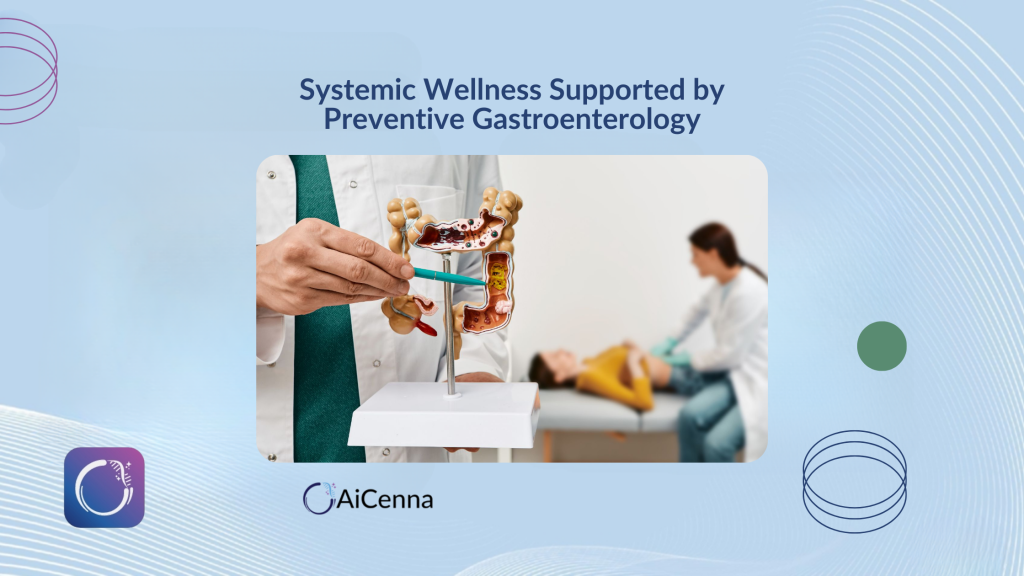
Introduction The gastrointestinal (GI) tract is more than a digestive system — it is a central hub for immunity, metabolism, and even mental health. Increasingly, research shows that gut health is deeply connected to systemic wellness. Preventive gastroenterology focuses on maintaining GI health, detecting disease early, and leveraging the gut as a gateway to whole‑body prevention. This article explores the science of the gut microbiome, the links between GI health and chronic disease, and the role of preventive strategies in reducing the global burden of digestive and systemic illness. The Gut as a Central Organ of Health 1. Digestion and Nutrient Absorption 2. Immune Function 3. Gut–Brain Axis (Reference: Cryan et al., Nat Rev Gastroenterol Hepatol, 2019.) The Microbiome and Systemic Wellness 1. Metabolic Health 2. Cardiovascular Disease 3. Autoimmune and Inflammatory Disorders 4. Mental Health (Reference: Lynch & Pedersen, N Engl J Med, 2016.) Preventive Gastroenterology in Practice 1. Screening and Early Detection 2. Nutrition and Lifestyle 3. Probiotics and Prebiotics 4. Vaccination Case Studies and Evidence Preventive Gastroenterology Across the Lifespan Children Adults Older Adults Challenges and Barriers The Future of Preventive Gastroenterology (Reference: Nature Medicine, 2021 — “The microbiome and preventive health.”) Conclusion The gut is not just a digestive organ — it is a central regulator of systemic health. Preventive gastroenterology emphasizes early detection, lifestyle interventions, and microbiome support to reduce the burden of chronic disease. By integrating gut health into preventive medicine, we can move toward a future where digestive and systemic diseases are detected earlier, managed proactively, and often prevented altogether.
Stress Biology, Cortisol Regulation, and Disease Progression
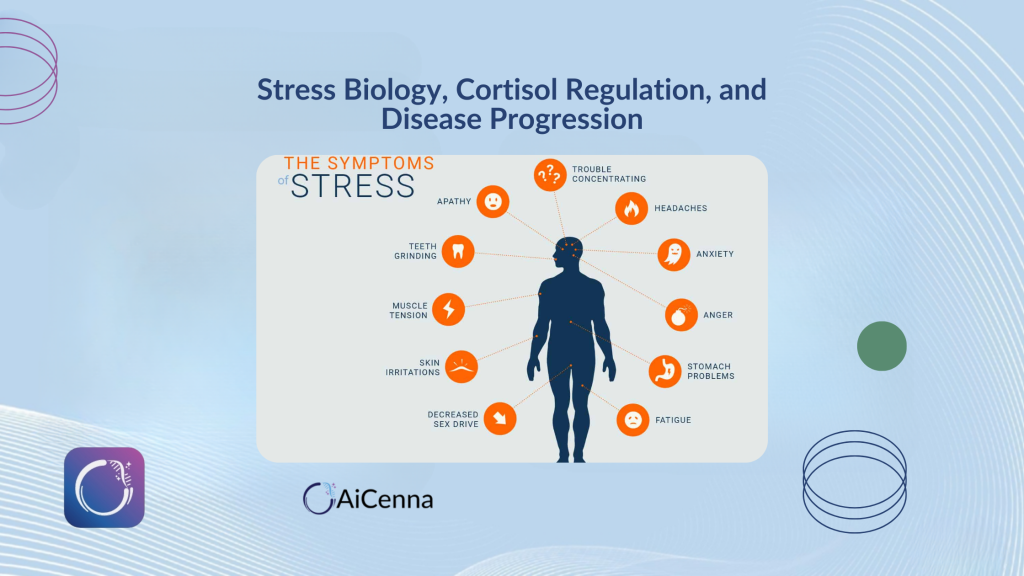
Introduction Stress is often described as a mental or emotional state, but its effects reach far beyond the mind. At the center of this connection is cortisol, a hormone released by the adrenal glands in response to stress. While cortisol is essential for survival, chronic elevation can quietly reshape the body, increasing the risk of long‑term health problems. Understanding this biology is the first step toward prevention. What Happens When You’re Stressed When the brain perceives a threat — whether it’s a looming deadline or a physical danger — the hypothalamic-pituitary-adrenal (HPA) axis activates. This triggers the release of cortisol, which: In short bursts, this system is protective. But when stress becomes constant, the same mechanisms can turn harmful. Cortisol and the Body: System by System 1. Cardiovascular System 2. Immune System 3. Metabolism 4. Brain and Mental Health 5. Musculoskeletal System Stress and Chronic Disease: The Evidence Everyday Sources of Chronic Stress These stressors rarely feel life‑threatening, but the body reacts as if they are. Managing Stress: Evidence‑Based Approaches Lifestyle Interventions Mind‑Body Practices Social and Psychological Support The Bigger Picture Stress is not just “in your head.” It is a biological process with measurable consequences. Cortisol, while vital in the short term, becomes a silent driver of chronic disease when left unchecked. Recognizing stress as a medical risk factor — alongside smoking, poor diet, and lack of exercise — is essential for a healthier future. Conclusion We cannot eliminate stress from modern life, but we can change how we respond to it. By understanding the science of cortisol and its impact on the body, individuals and healthcare systems alike can take proactive steps to reduce the burden of stress‑related disease.