For decades, a trip to the doctor meant sitting in a waiting room, leafing through old magazines, and hoping your appointment wouldn’t run too long. Today, however, medicine is undergoing a transformation that is reshaping the way patients and physicians interact. The drivers of this change? Artificial intelligence (AI) and telehealth.
Telehealth: From Convenience to Necessity
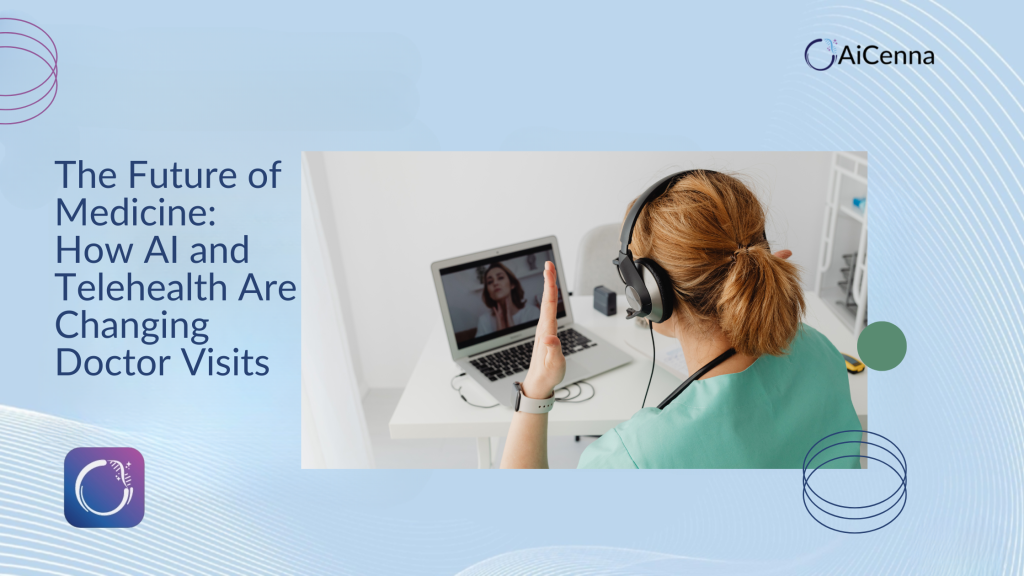
Telehealth surged during the COVID-19 pandemic, when in-person visits became risky or impossible. What began as a stopgap quickly proved to be a sustainable alternative. Virtual appointments allow patients to connect with their doctors from home, saving time, reducing travel costs, and expanding access for those in rural or underserved areas.
In fact, studies show that 83% of patients who used telehealth during the pandemic want to continue doing so because of its convenience and accessibility (American Medical Association, 2021). For chronic conditions like diabetes, hypertension, or mental health disorders, virtual follow-ups are now often the norm rather than the exception.
The Rise of AI in Clinical Practice
While telehealth solves the where of patient care, AI is revolutionizing the how. AI tools are increasingly being integrated into diagnostic imaging, treatment planning, and even predictive analytics. For instance, AI-powered radiology software can flag suspicious lesions on X-rays with accuracy comparable to human radiologists, helping clinicians make faster, more precise decisions.
Additionally, natural language processing (NLP) algorithms are being deployed to transcribe medical notes, freeing doctors from time-consuming paperwork so they can focus more on patients. Predictive AI models can also identify patients at high risk of complications, enabling early interventions that save lives and reduce healthcare costs.
A New Doctor-Patient Relationship
The combined effect of AI and telehealth is shifting the doctor-patient relationship. Instead of episodic visits during illnesses, care is becoming continuous, data-driven, and preventive. Patients may soon share wearable device data directly with their doctors, while AI systems analyze patterns to provide actionable insights between visits.
For doctors, this creates both opportunities and challenges. On one hand, they can deliver more personalized, proactive care. On the other, they must navigate new technologies, ensure data privacy, and balance digital efficiency with the human empathy that patients still deeply value.
Looking Ahead
The future of medicine will likely blend traditional in-person care with technology-enabled tools. AI will not replace physicians but will act as an intelligent assistant—helping them make better decisions, reduce burnout, and deliver more precise treatment. Telehealth will continue to expand access, bridging gaps in global healthcare delivery.
But as with any major shift, success depends on integrating these technologies responsibly, with safeguards for patient trust, equity, and clinical accuracy.
Where AiCenna Fits In
As AI and telehealth become central to healthcare, solutions like AiCenna are helping bridge the gap between advanced technology and practical patient care. By enabling better decision support and streamlining clinical workflows, AiCenna represents the kind of thoughtful innovation that empowers doctors while keeping patients at the center.
The future of medicine is a human-centered technology, and AiCenna is building part of that future.