Introduction
For decades, genetics was seen as destiny. If you carried a gene for a disease, the assumption was that illness was inevitable. But the rise of epigenetics — the study of how behaviors and environment influence gene activity without altering DNA sequence — has transformed that view.
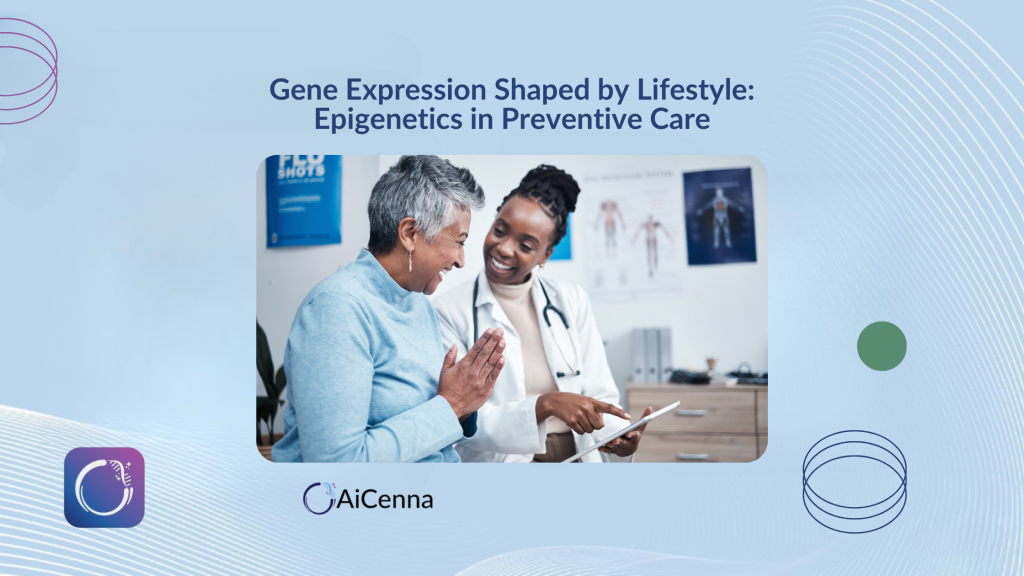
Epigenetics shows that while we cannot change the genes we inherit, we can influence how those genes are expressed. Lifestyle factors such as diet, exercise, stress, and exposure to toxins can switch genes “on” or “off,” shaping health outcomes across the lifespan. This insight is reshaping preventive medicine, offering new strategies to reduce disease risk before symptoms appear.
What Is Epigenetics?
Epigenetics refers to heritable changes in gene expression that do not involve alterations to the DNA sequence itself. The main mechanisms include:
- DNA methylation: Addition of methyl groups to DNA, often silencing genes.
- Histone modification: Chemical changes to proteins around which DNA is wrapped, influencing accessibility of genes.
- Non‑coding RNAs: Molecules that regulate gene expression post‑transcriptionally.
These modifications act like “switches and dimmers,” controlling which genes are active in different tissues and at different times.
(Reference: Allis & Jenuwein, Nature, 2016 — “The molecular hallmarks of epigenetic control.”)
Epigenetics and Disease Risk
1. Cancer
- Aberrant DNA methylation can silence tumor suppressor genes.
- Environmental exposures (e.g., smoking, pollution) leave epigenetic “signatures” that increase cancer risk.
2. Cardiovascular Disease
- Epigenetic changes in vascular cells contribute to atherosclerosis.
- Lifestyle interventions like diet and exercise can reverse some of these changes.
3. Metabolic Disorders
- Epigenetic regulation of insulin signaling genes influences risk of type 2 diabetes.
- Maternal nutrition during pregnancy can “program” offspring metabolism.
4. Neurological Disorders
- Epigenetic dysregulation is implicated in Alzheimer’s, Parkinson’s, and depression.
- Stress and trauma can alter methylation patterns in genes regulating mood.
(References: Feinberg, NEJM, 2018; Lappalainen & Greally, Nat Rev Genet, 2017.)
Lifestyle Factors That Influence Epigenetics
1. Nutrition
- Diets rich in folate, B vitamins, and polyphenols support DNA methylation.
- High‑fat, high‑sugar diets promote harmful epigenetic changes linked to obesity and diabetes.
- Caloric restriction and Mediterranean diets show beneficial epigenetic effects.
(Reference: Milagro et al., Adv Nutr, 2013.)
2. Physical Activity
- Exercise alters methylation of genes involved in energy metabolism and inflammation.
- Regular activity is associated with “younger” epigenetic age.
(Reference: Voisin et al., Epigenomics, 2015.)
3. Stress and Mental Health
- Chronic stress increases methylation of glucocorticoid receptor genes, impairing stress response.
- Mindfulness and meditation may reverse some stress‑related epigenetic changes.
(Reference: Zannas et al., Nat Neurosci, 2015.)
4. Environmental Exposures
- Air pollution, heavy metals, and endocrine disruptors leave lasting epigenetic marks.
- These changes can persist across generations.
(Reference: Baccarelli & Bollati, Lancet, 2009.)
Epigenetic Clocks and Biological Age
Researchers have developed epigenetic clocks that estimate biological age based on DNA methylation patterns. These clocks often predict health outcomes better than chronological age.
- Faster “epigenetic aging” is linked to higher risk of mortality, cancer, and cardiovascular disease.
- Lifestyle interventions (diet, exercise, stress reduction) can slow epigenetic aging.
(Reference: Horvath, Genome Biology, 2013.)
Implications for Preventive Medicine
- Risk Assessment
- Epigenetic biomarkers could identify individuals at high risk long before disease develops.
- Personalized Interventions
- Tailoring diet, exercise, and stress management to an individual’s epigenetic profile.
- Reversibility
- Unlike genetic mutations, many epigenetic changes are reversible, offering hope for prevention and even reversal of disease risk.
- Intergenerational Health
- Maternal and paternal lifestyle choices influence offspring epigenetics, highlighting the importance of prevention before conception.
(Reference: Szyf, Nat Rev Genet, 2009.)
Challenges and Ethical Considerations
- Complexity: Epigenetic changes are dynamic and context‑dependent, making interpretation difficult.
- Equity: Access to epigenetic testing may be limited in low‑resource settings.
- Privacy: Epigenetic data could reveal sensitive information about health risks.
- Determinism vs. Empowerment: Messaging must avoid blaming individuals for disease while emphasizing actionable prevention.
The Future of Epigenetic Medicine
- Multi‑omics integration: Combining epigenetics with genomics, proteomics, and metabolomics for holistic risk prediction.
- AI‑driven analysis: Machine learning to identify complex epigenetic patterns.
- Epigenetic therapies: Drugs targeting methylation and histone modification are already in use for cancer and may expand to prevention.
- Population health: Epigenetic biomarkers could guide public health strategies for nutrition, pollution control, and stress reduction.
(Reference: Nature Medicine, 2021 — “Epigenetics and the future of preventive medicine.”)
Conclusion
Epigenetics has redefined our understanding of health and disease. It shows that genes are not destiny — lifestyle and environment profoundly shape gene expression. For preventive medicine, this means that interventions in diet, exercise, stress, and environment can alter biological pathways long before disease manifests.
The promise of epigenetics is not only in predicting risk but in empowering individuals and societies to take control of health at the molecular level. By integrating epigenetics into preventive care, medicine can move closer to its ultimate goal: not just treating illness, but preventing it altogether.