
Eye Health and Preventive Ophthalmology: A Window Into Whole‑Body Wellness
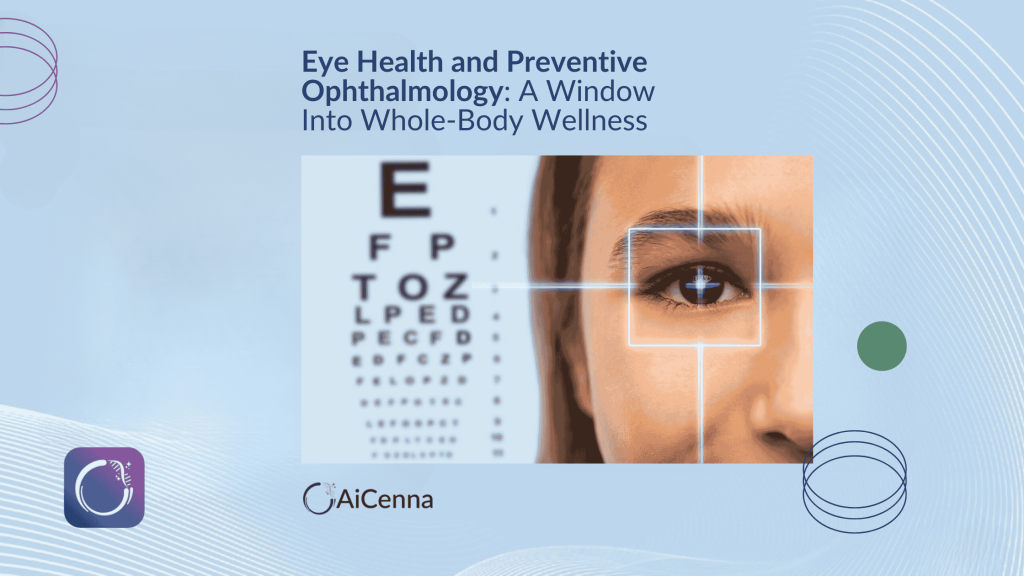
Introduction The eyes are often called the “windows to the soul,” but in medicine, they are also windows to the body. Ophthalmologists and optometrists can detect not only eye diseases but also systemic conditions such as diabetes, hypertension, autoimmune disorders, and even neurodegenerative diseases. Preventive ophthalmology — the practice of using eye examinations and interventions to detect and prevent disease — is increasingly recognized as a cornerstone of whole‑body health. This article explores how the eye reveals systemic disease, the importance of preventive eye care, and the future of ophthalmology in preventive medicine. The Eye as a Diagnostic Window 1. Diabetes 2. Hypertension 3. Autoimmune Disorders 4. Neurodegenerative Diseases 5. Infectious Diseases Preventive Eye Care Across the Lifespan Children Adults Older Adults (Reference: Age‑Related Eye Disease Study [AREDS], Arch Ophthalmol, 2001.) The Burden of Preventable Blindness (Reference: WHO World Report on Vision, 2019.) Innovations in Preventive Ophthalmology 1. Retinal Imaging and AI 2. Tele‑ophthalmology 3. Portable Devices 4. Biomarker Discovery Preventive Strategies for Eye Health Challenges and Barriers The Future of Preventive Ophthalmology Conclusion The eyes are more than organs of vision — they are mirrors of systemic health. Preventive ophthalmology demonstrates how routine eye exams can detect diabetes, hypertension, autoimmune disease, and even neurodegeneration before symptoms appear. By integrating eye care into preventive medicine, we can reduce the global burden of blindness, improve systemic disease detection, and enhance quality of life. In the future, a simple retinal scan may become as routine as checking blood pressure — a vital sign of whole‑body health.
From Wearables to Biosensors: How Everyday Devices Are Becoming Medical Tools
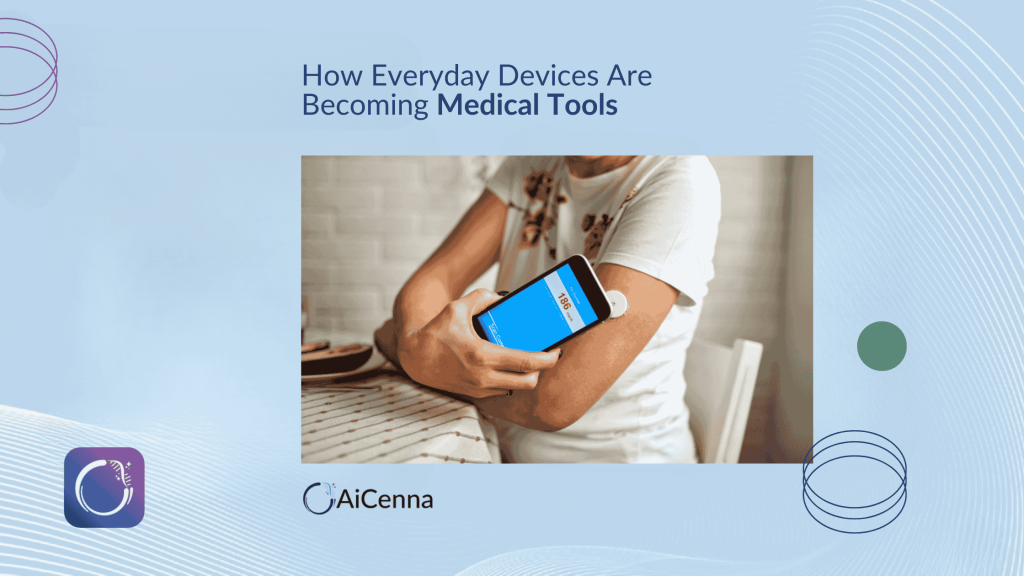
Introduction A decade ago, most people thought of wearables as glorified pedometers. Today, the same devices can detect irregular heart rhythms, monitor oxygen saturation, and even alert emergency services in real time. Alongside consumer gadgets, a new generation of biosensors — from continuous glucose monitors to smart patches — is transforming how health is tracked and managed. This shift represents one of the most significant changes in modern medicine: the migration of monitoring from the clinic to the wrist, skin, or pocket. The Evolution of Wearables (Reference: U.S. Food and Drug Administration, 2018 — Apple Watch ECG clearance.) What Are Biosensors? Biosensors are devices that detect biological signals (like glucose, lactate, or cortisol) and convert them into measurable data. Unlike general wearables, biosensors are often continuous, minimally invasive, and clinically validated. Examples include: (Reference: Nature Biomedical Engineering, 2020 — review on wearable biosensors.) Clinical Applications (References: Journal of the American College of Cardiology, 2019; Diabetes Care, 2021; Lancet Digital Health, 2020.) Benefits and Opportunities Challenges and Limitations (Reference: Journal of Medical Internet Research, 2022 — systematic review on wearable accuracy and equity.) The Future of Biosensing (Reference: Nature Medicine, 2021 — AI and biosensor integration.) Conclusion Wearables and biosensors are no longer novelties — they are becoming integral medical tools. While challenges remain in accuracy, privacy, and accessibility, the trajectory is clear: healthcare is moving closer to the individual, powered by sensors that fit seamlessly into daily life. The future of medicine may not be confined to hospitals and clinics, but worn, patched, or implanted on the body itself.
Genomics, AI, and Biosensors Driving the Next Era of Personalized Medicine
Introduction For much of modern history, medicine has been practiced as a “one‑size‑fits‑all” discipline. Patients with the same diagnosis often receive the same treatment, even though outcomes vary widely. Today, advances in genomics, artificial intelligence (AI), and biosensors are converging to change that paradigm. The goal is personalized medicine — tailoring prevention, diagnosis, and treatment to the unique biology of each individual. This article explores how these three fields are intersecting, the evidence behind their promise, and the challenges that must be addressed before personalized medicine becomes the global standard of care. Genomics: Reading the Blueprint of Health The sequencing of the human genome in 2003 was a landmark achievement. Since then, costs have plummeted from nearly $3 billion to under $500 for a full genome. Applications in personalized medicine: (References: Collins et al., Nature, 2003; Manolio et al., NEJM, 2019.) Biosensors: Real‑Time Health Monitoring Biosensors are devices that detect biological signals and convert them into measurable data. Unlike traditional lab tests, they provide continuous, real‑time monitoring. Examples: By integrating biosensor data with genomics, doctors can see not only a patient’s predisposition to disease but also their real‑time physiology. (Reference: Nature Biomedical Engineering, 2020 — review on wearable biosensors.) Artificial Intelligence: Making Sense of Complexity Genomic sequencing produces terabytes of data. Biosensors generate continuous streams of information. AI is the tool that makes this data clinically useful. Roles of AI in personalized medicine: (Reference: Topol, E. “High‑performance medicine,” Nat Med, 2019.) Case Studies 1. Oncology 2. Cardiology 3. Endocrinology (References: NEJM, 2018 — precision oncology; Corral‑Acero et al., Eur Heart J, 2020 — digital twins in cardiology.) Benefits of Integration Challenges and Limitations 1. Data Privacy and Security 2. Equity and Access 3. Clinical Validation 4. Ethical Concerns (Reference: Nature Medicine, 2021 — “Ethics of personalized medicine.”) The Future of Personalized Medicine (Reference: National Academies of Sciences, Engineering, and Medicine, 2022 — “Realizing the Promise of Personalized Medicine.”) Conclusion Personalized medicine is no longer a distant vision. By combining genomics, AI, and biosensors, healthcare is moving toward a future where prevention is proactive, treatment is precise, and patients are empowered partners in their care. The challenge now is not whether personalized medicine is possible — it is how to make it equitable, ethical, and accessible. If achieved, this convergence could mark one of the greatest transformations in the history of medicine.
How AI is Transforming Radiology: From Image Recognition to Predictive Insights
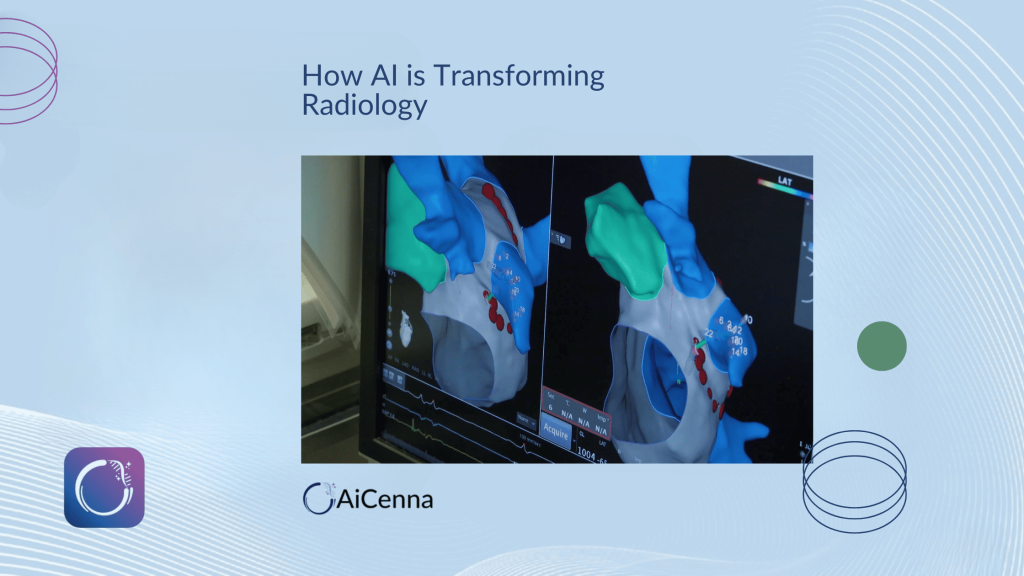
Introduction Radiology has always been at the cutting edge of medical technology. From Wilhelm Röntgen’s discovery of X‑rays in 1895 to the development of CT, MRI, and PET scans, imaging has revolutionized diagnosis and treatment. Today, radiology is undergoing another transformation — powered by artificial intelligence (AI). AI is no longer confined to research labs; it is being integrated into clinical workflows, assisting radiologists in detecting disease, predicting outcomes, and even guiding treatment. This article explores how AI is reshaping radiology, the evidence behind its use, and the challenges that remain. The Rise of AI in Medical Imaging AI in radiology primarily relies on deep learning, a subset of machine learning that uses neural networks to analyze complex data. These algorithms can be trained on millions of images to recognize patterns that may be invisible to the human eye. (Reference: Esteva et al., Nature, 2017 — “Dermatologist‑level classification of skin cancer with deep neural networks.”) Clinical Applications 1. Cancer Detection 2. Neurology 3. Musculoskeletal Imaging 4. Cardiology Beyond Detection: Predictive Insights AI is moving radiology from descriptive to predictive and prescriptive medicine. (Reference: Lambin et al., Nat Rev Clin Oncol, 2017 — “Radiomics: extracting more information from medical images.”) Benefits for Radiologists and Patients Challenges and Limitations 1. Data Quality 2. Interpretability 3. Regulation 4. Integration 5. Ethical Concerns (Reference: Topol, E. “High‑performance medicine: the convergence of human and artificial intelligence.” Nat Med, 2019.) What Radiologists Say Surveys show that most radiologists view AI not as a replacement but as a partner. The consensus is that AI will augment human expertise, handling repetitive tasks while radiologists focus on interpretation, communication, and patient care. (Reference: European Society of Radiology, Insights into Imaging, 2019.) The Future of AI in Radiology (Reference: Nature Medicine, 2021 — “Artificial intelligence in medical imaging: opportunities and challenges.”) Conclusion AI is transforming radiology from a discipline focused on detecting disease to one capable of predicting outcomes and guiding treatment. While challenges remain in data quality, regulation, and ethics, the trajectory is clear: AI will not replace radiologists but will empower them. The radiology department of the future may look very different — not because humans are absent, but because they are working side by side with intelligent systems that extend their vision, speed, and precision.
How Climate Change is Affecting Your Health: What Doctors Are Seeing in Clinics
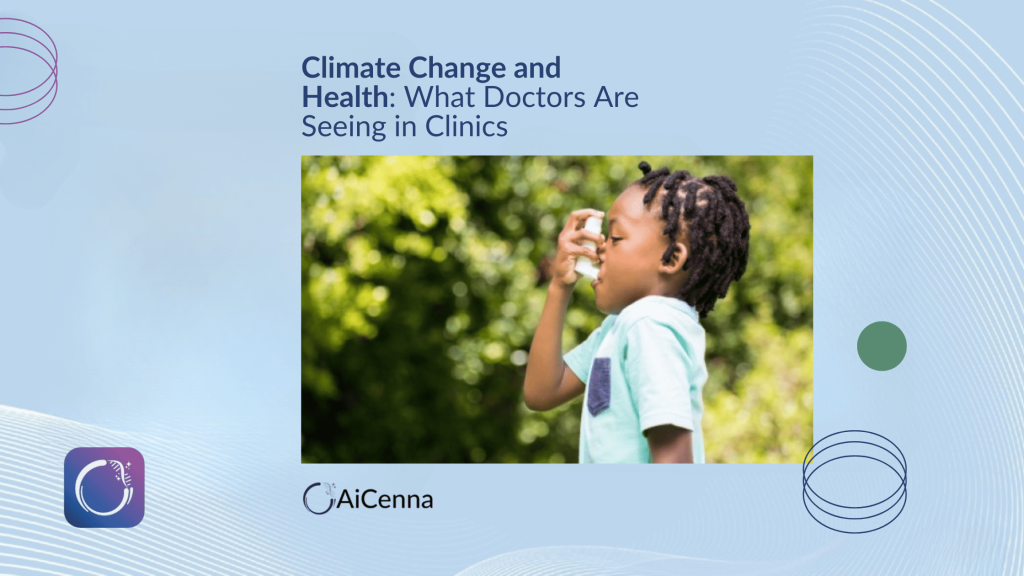
Introduction When people think of climate change, they often picture melting glaciers, rising seas, or endangered polar bears. But for doctors, the most urgent images are far closer to home: patients struggling with asthma during wildfire season, heatstroke victims in emergency rooms, and children with worsening allergies as pollen seasons lengthen. Climate change is not a distant environmental issue — it is a present‑day health crisis. Physicians across the world are witnessing its effects in their clinics, from respiratory illness to mental health strain. This article explores the evidence, the mechanisms, and the lived reality of how a warming planet is reshaping human health. Heat: The Silent Killer Extreme heat is one of the deadliest consequences of climate change. Doctors report that heat doesn’t just cause acute illness — it worsens existing conditions like heart failure and diabetes. Air Quality and Respiratory Disease Climate change worsens air pollution in two ways: Doctors are seeing more children with asthma exacerbations, more adults with chronic bronchitis, and more hospitalizations during poor air quality days. Infectious Diseases on the Move Warming temperatures and shifting rainfall patterns expand the habitats of disease‑carrying insects. Clinicians in previously unaffected areas are now diagnosing diseases once considered “tropical.” (Reference: WHO, 2021 — Climate Change and Health report.) Allergies and Immune Health (Reference: Ziska et al., PNAS, 2019.) Mental Health: The Invisible Toll Climate change also affects the mind. Clinicians are increasingly recognizing climate change as a driver of mental health burden. (Reference: Clayton et al., Int J Environ Res Public Health, 2017.) Cardiovascular Strain Heat, air pollution, and stress converge to burden the heart. (Reference: Brook et al., Circulation, 2010 — Air Pollution and Cardiovascular Disease.) Who Is Most at Risk? (Reference: IPCC, 2022 — Sixth Assessment Report, Health Chapter.) What Doctors Are Doing Clinicians are not just treating symptoms — they are adapting practice: Medical associations, including the American Medical Association and the British Medical Association, now recognize climate change as a health emergency. What Individuals Can Do (Reference: CDC Climate and Health Program, 2023.) Conclusion Climate change is not just an environmental issue — it is a medical issue. Doctors are already treating its consequences: heatstroke, asthma, infectious disease, anxiety, and heart attacks. The clinic has become a frontline for climate impacts.
Kidney Health Protection Through Preventive Nephrology

Introduction The kidneys are often overlooked until something goes wrong. Yet these two bean‑shaped organs filter about 50 gallons of blood every single day, removing waste, balancing electrolytes, regulating blood pressure, and producing hormones critical for bone and red blood cell health. Chronic kidney disease (CKD) affects nearly 850 million people worldwide, according to the International Society of Nephrology, and is projected to become the fifth leading cause of death by 2040. The tragedy is that much of this burden is preventable. Preventive nephrology focuses on protecting kidney health before irreversible damage occurs, shifting care from dialysis and transplantation to early detection and proactive management. Why Kidney Health Matters (Reference: Jager et al., Nat Rev Nephrol, 2019.) Major Risk Factors for Kidney Disease 1. Diabetes 2. Hypertension 3. Obesity and Metabolic Syndrome 4. Cardiovascular Disease 5. Infections and Toxins 6. Genetic Disorders (Reference: KDIGO Clinical Practice Guidelines, 2022.) Tools for Early Detection 1. Blood Tests 2. Urine Tests 3. Imaging 4. Risk Scores and Digital Tools (Reference: Tangri et al., JAMA, 2011 — Kidney Failure Risk Equation.) Preventive Interventions 1. Lifestyle Medicine 2. Blood Pressure and Diabetes Control 3. Avoiding Nephrotoxins 4. Vaccination 5. Patient Education Case Studies and Evidence Preventive Nephrology Across the Lifespan Children Adults Older Adults Challenges and Barriers The Future of Preventive Nephrology (Reference: Nature Medicine, 2021 — “The future of kidney health.”) Conclusion The kidneys are silent workhorses, but their failure is anything but silent. Preventive nephrology emphasizes early detection, lifestyle interventions, and proactive management to protect kidney health long before dialysis or transplantation is needed. By integrating kidney health into preventive medicine, we can reduce the global burden of CKD, improve quality of life, and save billions in healthcare costs. Protecting the kidneys is not just about avoiding dialysis — it is about safeguarding the body’s entire internal balance.