
Become a Founding Member at AiCenna

AiCenna is currently raising capital through a Regulation Crowdfunding (Reg-CF) campaign on ChainRaise, inviting both accredited and non-accredited investors to join its mission to revolutionize healthcare. With a minimum investment of $1,000 and a valuation of $20 million, the campaign supports AiCenna’s development of its Digital Twin platform—an all-in-one system integrating biosensing, AI, and genomics for predictive, personalized care. For more information, please visit https://aicenna.chainraise.io
AiCenna’s Vision and Launch of SEC Regulated Crowd Funding

Dr. Salman Gilani, CEO and Founder of AiCenna, brings deep expertise in regenerative medicine and stem cell therapy to the forefront of health-tech innovation. A Fellow and Diplomat of both the American Academy of Anti-Aging Medicine and the American Board of Regenerative Medicine, Dr. Gilani has dedicated his career to advancing scientifically backed treatments. At AiCenna, he leads the development of AI-powered diagnostic tools and personalized care protocols, merging biosensing, genomics, and predictive analytics to redefine proactive healthcare. His leadership bridges clinical excellence with cutting-edge technology, aiming to transform global standards of patient care.
Children’s Health and Preventive Genomics: Predicting Future Risk
Introduction Imagine being able to identify a child’s risk for heart disease, diabetes, or certain cancers decades before symptoms appear. Preventive genomics — the use of genetic information to predict and reduce disease risk — is making this possible. While genomics has already transformed oncology and rare disease diagnosis, its application in pediatrics is especially powerful. By identifying risks early, clinicians and families can take proactive steps to prevent illness, long before adulthood. But this promise comes with challenges: ethical dilemmas, data privacy, and the risk of over‑medicalization. This article explores the science, benefits, and controversies of preventive genomics in children. What Is Preventive Genomics? Preventive genomics involves sequencing or analyzing a child’s DNA to identify genetic variants associated with disease risk. Unlike diagnostic genomics, which explains existing symptoms, preventive genomics looks forward — predicting what might happen. Key tools include: (Reference: Manolio et al., NEJM, 2019 — “Implementing genomic medicine in the clinic.”) Why Focus on Children? (Reference: Green et al., Genet Med, 2013 — ACMG recommendations on reporting incidental findings.) Examples of Preventive Genomics in Pediatrics 1. Cardiovascular Risk 2. Type 1 Diabetes 3. Cancer Predisposition 4. Pharmacogenomics Polygenic Risk Scores in Children Polygenic risk scores (PRS) combine thousands of genetic variants to estimate risk for common diseases like obesity, diabetes, and heart disease. (Reference: Khera et al., Nat Med, 2019.) Ethical and Social Challenges 1. Autonomy and Consent 2. Psychological Impact 3. Over‑medicalization 4. Equity 5. Data Privacy (Reference: Botkin et al., Pediatrics, 2015 — Ethical issues in pediatric genetic testing.) Clinical Guidelines and Current Practice (Reference: Kingsmore et al., JAMA, 2019 — Genomic sequencing in newborn screening.) The Future of Preventive Genomics in Children 1. Integration with Digital Health 2. AI‑Driven Prediction 3. Global Expansion 4. Preventive Therapies (Reference: Nature Medicine, 2021 — “The future of pediatric genomics.”) Conclusion Preventive genomics in children represents both a tremendous opportunity and a profound responsibility. By identifying risks early, we can intervene decades before disease manifests, potentially transforming lifelong health trajectories. But the field must proceed with caution. Ethical safeguards, equitable access, and rigorous validation are essential. The ultimate goal is not to burden children with genetic determinism, but to empower families and clinicians with knowledge that supports healthier, longer lives.
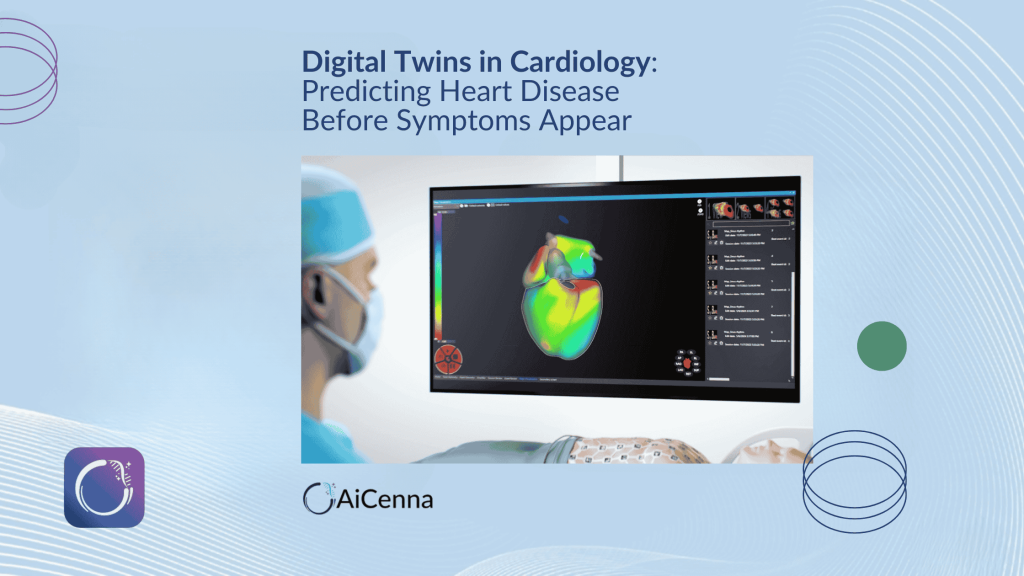
Digital Twins in Cardiology: Predicting Heart Disease Before Symptoms Appear
Introduction Heart disease remains the leading cause of death worldwide, responsible for nearly 18 million deaths annually according to the World Health Organization (WHO). Despite advances in treatment, many patients are diagnosed only after symptoms appear — often when damage is already irreversible. Enter the concept of the digital twin: a virtual replica of a patient’s heart, built from imaging, biosensor data, and genetic information. This technology allows doctors to simulate how an individual’s heart functions, predict disease progression, and test interventions before they are applied in real life. What was once science fiction is now becoming a powerful tool in preventive cardiology. What Is a Digital Twin? A digital twin is a dynamic, data‑driven model of a physical system. In healthcare, it represents a patient’s organ or even their entire physiology. For cardiology, this means creating a personalized, virtual heart that mirrors the patient’s anatomy and function. Key inputs include: (Reference: Viceconti et al., “In silico trials: A roadmap for the future of medical simulation,” Front Physiol, 2016.) Why Cardiology Is a Natural Fit The heart is a highly dynamic organ where small changes can have major consequences. Digital twins are particularly suited to cardiology because: Applications in Predicting Heart Disease 1. Early Detection of Arrhythmias 2. Personalized Risk Stratification 3. Virtual Stress Testing 4. Optimizing Treatment 5. Monitoring Progression Case Studies and Clinical Evidence Benefits for Patients and Clinicians Challenges and Limitations (Reference: Nature Medicine, 2021 — “Digital twins in healthcare: ethical and regulatory challenges.”) The Future of Digital Twins in Cardiology (Reference: Corral‑Acero et al., Eur Heart J, 2020 — “The digital twin in cardiology.”) Conclusion Digital twins represent a paradigm shift in cardiology. By creating virtual replicas of patients’ hearts, doctors can predict disease before symptoms appear, personalize treatment, and monitor progression in real time. While challenges remain in data integration, validation, and equity, the potential is transformative. For the first time, medicine may move from treating heart disease after it strikes to preventing it before it begins.
Digital Health Literacy: How Patients Can Take Control of Their Own Data
Introduction Healthcare is undergoing a digital transformation. Electronic health records (EHRs), wearable devices, telemedicine platforms, and patient portals are now central to how care is delivered. But access to data alone is not enough. To benefit, patients must be able to find, understand, evaluate, and use digital health information — a skill set known as digital health literacy. Without it, the promise of digital health risks leaving many behind. This article explores what digital health literacy means, why it matters, the barriers patients face, and how individuals and health systems can bridge the gap. What Is Digital Health Literacy? Digital health literacy is an extension of traditional health literacy. It goes beyond reading and comprehension to include: (Reference: Norman & Skinner, “eHealth Literacy,” J Med Internet Res, 2006.) Why It Matters (Reference: WHO Global Strategy on Digital Health, 2020.) The Digital Health Landscape Patients Face Electronic Health Records (EHRs) Wearables and Apps Telemedicine Online Health Information (Reference: Pew Research Center, 2021 — “The Internet and Health.”) Barriers to Digital Health Literacy (Reference: Journal of Medical Internet Research, 2022 — systematic review on digital health literacy barriers.) Case Studies Strategies to Improve Digital Health Literacy For Patients For Healthcare Providers For Policymakers (References: WHO, 2020; Institute of Medicine, 2012; Health Affairs, 2019.) The Role of Trust and Privacy Digital health literacy is not just about skills — it’s also about confidence. Patients must trust that their data is secure. Transparency about data use, clear consent processes, and strong privacy protections are essential to build that trust. (Reference: Hastings Center Report, 2021.) Looking Ahead The future of digital health literacy may include: (Reference: Nature Medicine, 2021 — digital health innovation review.) Conclusion Digital health literacy is the bridge between technology and better health outcomes. Without it, the benefits of EHRs, wearables, and telemedicine remain out of reach for many. With it, patients can take control of their data, engage in shared decision‑making, and move from passive recipients of care to active partners in their health journey.
Detecting Cognitive Decline Early: The Critical Role of Preventive Neurology
Introduction Neurological disorders are among the most pressing health challenges of the 21st century. Dementia alone affects more than 55 million people worldwide, with nearly 10 million new cases each year, according to the World Health Organization (WHO). Alzheimer’s disease is the most common cause, but vascular dementia, Parkinson’s disease, and other neurodegenerative conditions also contribute to the growing burden. Traditionally, neurology has been reactive — diagnosing and treating disease after symptoms appear. But by the time memory loss or motor dysfunction is evident, significant and often irreversible brain damage has already occurred. Preventive neurology seeks to change this paradigm by detecting cognitive decline early, identifying risk factors, and intervening before disease progression. Why Early Detection Matters Risk Factors for Cognitive Decline Non‑modifiable Modifiable (Reference: Livingston et al., Lancet Commission on Dementia Prevention, 2020.) Tools for Early Detection 1. Neuropsychological Testing 2. Neuroimaging 3. Fluid Biomarkers 4. Digital Biomarkers 5. Genetic Testing Preventive Interventions 1. Lifestyle Medicine 2. Vascular Risk Management 3. Social and Psychological Health 4. Pharmacological and Experimental Approaches Case Studies and Evidence Challenges in Preventive Neurology The Future of Preventive Neurology (Reference: Nature Reviews Neurology, 2021 — “Precision prevention of Alzheimer’s disease.”) Conclusion Preventive neurology represents a shift from treating cognitive decline after it occurs to detecting and intervening early. By combining neuropsychological testing, imaging, biomarkers, and digital health tools, clinicians can identify at‑risk individuals long before dementia manifests. The evidence is clear: lifestyle interventions, vascular risk management, and social engagement can significantly reduce risk. The challenge is scaling these strategies equitably and ethically. If successful, preventive neurology could transform the trajectory of aging, allowing millions to live longer, healthier, and cognitively vibrant lives.