
Introduction
When people think of climate change, they often picture melting glaciers, rising seas, or endangered polar bears. But for doctors, the most urgent images are far closer to home: patients struggling with asthma during wildfire season, heatstroke victims in emergency rooms, and children with worsening allergies as pollen seasons lengthen.
Climate change is not a distant environmental issue — it is a present‑day health crisis. Physicians across the world are witnessing its effects in their clinics, from respiratory illness to mental health strain. This article explores the evidence, the mechanisms, and the lived reality of how a warming planet is reshaping human health.
Heat: The Silent Killer
Extreme heat is one of the deadliest consequences of climate change.
- Global data: Between 2000 and 2019, heat‑related mortality among people over 65 increased by 54%【Lancet Countdown, 2020】.
- Clinical reality: Emergency departments see spikes in heatstroke, dehydration, kidney injury, and cardiovascular collapse during heatwaves.
- Vulnerable groups: Older adults, outdoor workers, and people with chronic conditions are at highest risk.
Doctors report that heat doesn’t just cause acute illness — it worsens existing conditions like heart failure and diabetes.
Air Quality and Respiratory Disease
Climate change worsens air pollution in two ways:
- Wildfires: Hotter, drier conditions fuel massive fires, releasing fine particulate matter (PM2.5) that penetrates deep into the lungs.
- Example: The 2023 Canadian wildfires caused hazardous air quality across North America, leading to spikes in ER visits for asthma and COPD【NEJM, 2023】.
- Ground‑level ozone: Rising temperatures increase ozone formation, a potent lung irritant.
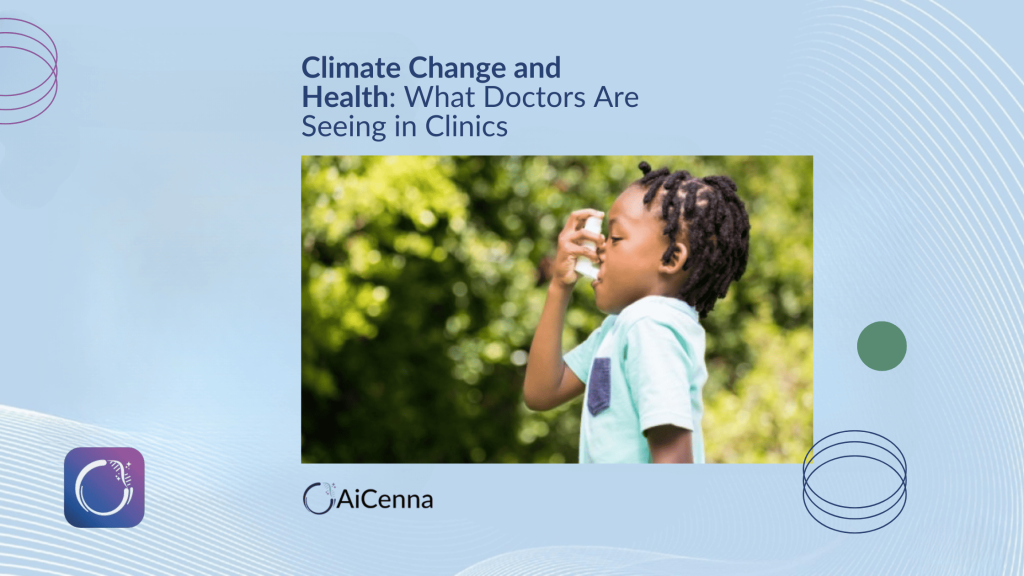
Doctors are seeing more children with asthma exacerbations, more adults with chronic bronchitis, and more hospitalizations during poor air quality days.
Infectious Diseases on the Move
Warming temperatures and shifting rainfall patterns expand the habitats of disease‑carrying insects.
- Mosquito‑borne diseases: Dengue, Zika, chikungunya, and malaria are spreading into new regions.
- Tick‑borne diseases: Lyme disease is moving northward in North America and Europe.
- Waterborne diseases: Flooding increases exposure to cholera, leptospirosis, and other pathogens.
Clinicians in previously unaffected areas are now diagnosing diseases once considered “tropical.”
(Reference: WHO, 2021 — Climate Change and Health report.)
Allergies and Immune Health
- Longer pollen seasons: Rising CO₂ and warmer temperatures extend pollen production.
- Higher allergenicity: Plants produce more potent pollen under climate stress.
- Clinical impact: Doctors report longer allergy seasons, more severe hay fever, and worsening asthma.
(Reference: Ziska et al., PNAS, 2019.)
Mental Health: The Invisible Toll
Climate change also affects the mind.
- Heat and aggression: Studies link extreme heat to higher rates of violence and suicide.
- Disaster trauma: Survivors of hurricanes, floods, and wildfires often develop PTSD, anxiety, and depression.
- Eco‑anxiety: Even those not directly affected report distress about the future of the planet.
Clinicians are increasingly recognizing climate change as a driver of mental health burden.
(Reference: Clayton et al., Int J Environ Res Public Health, 2017.)
Cardiovascular Strain
Heat, air pollution, and stress converge to burden the heart.
- Heat increases blood viscosity and dehydration, raising risk of stroke and heart attack.
- Air pollution contributes to atherosclerosis and arrhythmias.
- Doctors report more cardiac admissions during heatwaves and smog events.
(Reference: Brook et al., Circulation, 2010 — Air Pollution and Cardiovascular Disease.)
Who Is Most at Risk?
- Children: Developing lungs and immune systems make them highly vulnerable.
- Older adults: Reduced thermoregulation and higher rates of chronic disease.
- Low‑income communities: Often live in hotter urban “heat islands” with less access to healthcare.
- Outdoor workers: Construction, agriculture, and delivery workers face direct exposure.
(Reference: IPCC, 2022 — Sixth Assessment Report, Health Chapter.)
What Doctors Are Doing
Clinicians are not just treating symptoms — they are adapting practice:
- Heat action plans: Hospitals prepare for surges during heatwaves.
- Air quality alerts: Doctors advise patients with asthma to stay indoors on high‑pollution days.
- Vector surveillance: Public health departments track mosquito and tick populations.
- Mental health support: Integrating climate‑related stress into psychiatric care.
Medical associations, including the American Medical Association and the British Medical Association, now recognize climate change as a health emergency.
What Individuals Can Do
- Stay informed: Monitor local air quality and heat advisories.
- Protect vulnerable groups: Check on elderly neighbors during heatwaves.
- Reduce exposure: Use air filters indoors, wear masks during wildfire smoke events.
- Advocate: Support policies that reduce emissions and improve resilience.
(Reference: CDC Climate and Health Program, 2023.)
Conclusion
Climate change is not just an environmental issue — it is a medical issue. Doctors are already treating its consequences: heatstroke, asthma, infectious disease, anxiety, and heart attacks. The clinic has become a frontline for climate impacts.