
Vaccines are among the most successful public health interventions in history. They have eradicated smallpox, nearly eliminated polio, and dramatically reduced childhood mortality worldwide. The COVID‑19 pandemic reminded the world of their importance, but it also accelerated a new era of vaccine science. Messenger RNA (mRNA) platforms, rapid global distribution, and unprecedented collaboration showed what is possible when urgency meets innovation.
Yet the story of 21st‑century vaccines goes far beyond COVID‑19. Researchers are now exploring personalized immunization, cancer vaccines, and novel delivery systems that could transform how we prevent and treat disease. This article explores the science, challenges, and future of vaccines in the modern age.
Table of Content:
- A Brief History of Vaccination
- Traditional Vaccine Platforms
- The mRNA Revolution
- Cancer Vaccines: A New Frontier
- Personalized Immunization
- Novel Delivery Systems
- Global Equity and Challenges
- Ethical Considerations
- The Future of Vaccines
- Conclusion
A Brief History of Vaccination
- 18th century: Edward Jenner’s smallpox inoculation (1796) laid the foundation.
- 20th century: Widespread use of vaccines against polio, measles, diphtheria, and tetanus saved millions of lives.
- 21st century: Advances in genomics, synthetic biology, and nanotechnology are reshaping vaccine design.
(Reference: Plotkin, S. “History of vaccination.” Proc Natl Acad Sci USA, 2014.)
Traditional Vaccine Platforms
Before the mRNA revolution, vaccines were developed using several well‑established methods:
- Live‑attenuated vaccines: Contain weakened forms of the pathogen (e.g., measles, mumps, rubella).
- Inactivated vaccines: Use killed pathogens (e.g., polio, hepatitis A).
- Subunit vaccines: Contain only parts of the pathogen, such as proteins (e.g., hepatitis B, HPV).
- Toxoid vaccines: Target bacterial toxins (e.g., tetanus, diphtheria).
These approaches remain effective but often require long development timelines and complex manufacturing.
The mRNA Revolution
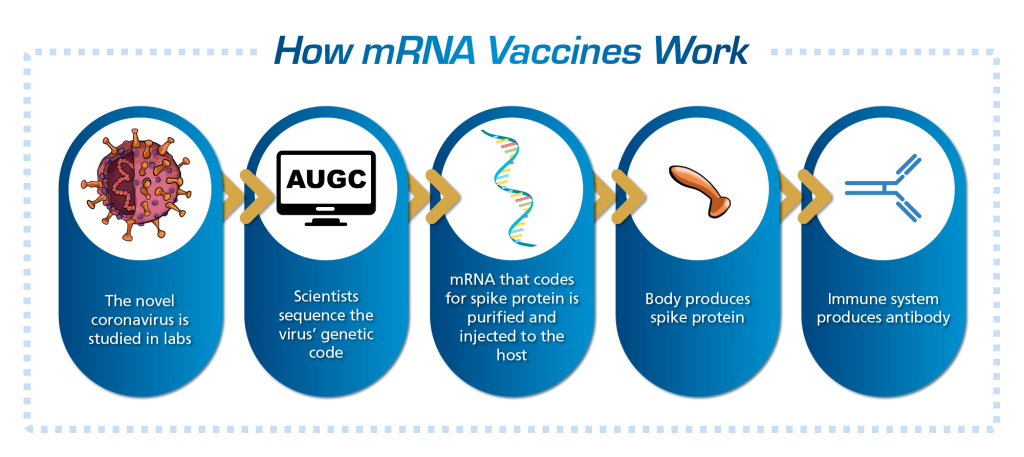
The COVID‑19 vaccines from Pfizer‑BioNTech and Moderna demonstrated the power of mRNA technology:
- Speed: Once the viral genome was sequenced, vaccine candidates were designed within weeks.
- Flexibility: mRNA platforms can be adapted to new pathogens quickly.
- Efficacy: Clinical trials showed >90% protection against symptomatic COVID‑19 in early phases.
Beyond COVID‑19, mRNA vaccines are being tested for influenza, Zika, HIV, and even cancer.
(References: Polack et al., NEJM, 2020; Baden et al., NEJM, 2021.)
Cancer Vaccines: A New Frontier
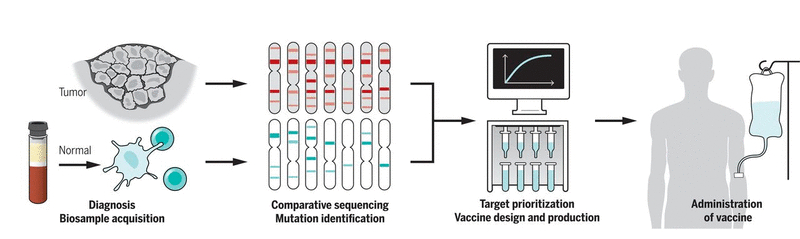
Unlike traditional vaccines that prevent infection, cancer vaccines aim to treat existing disease by training the immune system to recognize tumor‑specific antigens.
- Therapeutic vaccines: Designed to boost immune responses against cancer cells.
- Neoantigen vaccines: Personalized to target mutations unique to an individual’s tumor.
- Combination therapies: Cancer vaccines are often paired with checkpoint inhibitors to enhance effectiveness.
Clinical trials are underway for melanoma, lung cancer, and pancreatic cancer.
(Reference: Sahin & Türeci, Nature Reviews Drug Discovery, 2018.)
Personalized Immunization
The future of vaccines may be tailored to the individual:
- Genomic profiling: Identifying genetic variants that influence immune response.
- Polygenic risk scores: Predicting susceptibility to infectious diseases.
- Custom vaccine design: Using AI and bioinformatics to generate individualized formulations.
This approach could optimize protection while minimizing side effects.
(Reference: Nature Medicine, 2021 — “Personalized vaccines and the future of immunization.”)
Novel Delivery Systems
Traditional injections may not be the only way to vaccinate in the future. Researchers are developing:
- Microneedle patches: Painless, self‑administered, and stable without refrigeration.
- Oral vaccines: Easier to distribute in low‑resource settings.
- Intranasal vaccines: Target mucosal immunity, the first line of defense against respiratory pathogens.
(Reference: Lancet Infectious Diseases, 2020.)
Global Equity and Challenges
Despite scientific progress, challenges remain:
- Distribution: Cold‑chain requirements limit access in low‑income countries.
- Vaccine hesitancy: Misinformation undermines uptake.
- Intellectual property: Patent disputes can delay global access.
- Funding: Sustained investment is needed for neglected diseases like malaria and tuberculosis.
(References: WHO Global Vaccine Report, 2022; UNICEF vaccine equity data.)
Ethical Considerations
- Data privacy: Personalized vaccines require genetic information.
- Access: Will advanced vaccines widen the gap between wealthy and low‑income populations?
- Mandates vs. autonomy: Balancing public health with individual rights.
(Reference: Hastings Center Report, 2021.)
The Future of Vaccines
Looking ahead, vaccines may:
- Prevent not only infectious diseases but also non‑communicable conditions (e.g., Alzheimer’s, hypertension).
- Be designed and manufactured using AI‑driven platforms.
- Be distributed globally through low‑cost, needle‑free systems.
The ultimate vision is a world where vaccines are personalized, accessible, and preventive across the lifespan.
Conclusion
Vaccines in the 21st century are no longer limited to childhood shots or seasonal flu jabs. They are evolving into a diverse toolkit that includes mRNA platforms, cancer immunotherapies, and personalized formulations. While challenges of equity, access, and ethics remain, the trajectory is clear: vaccines will continue to be at the heart of preventive medicine, shaping not only how we fight infectious diseases but also how we approach chronic illness and global health. For more health related content, visit AiCenna.