
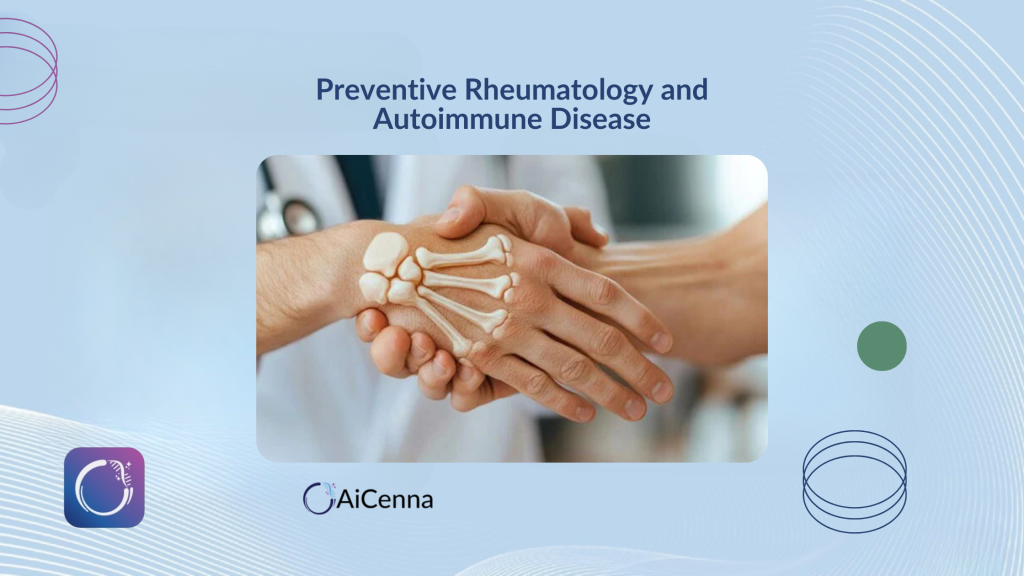
Introduction
Autoimmune and rheumatic diseases — including rheumatoid arthritis (RA), systemic lupus erythematosus (SLE), psoriatic arthritis, and ankylosing spondylitis — affect hundreds of millions worldwide. These conditions occur when the immune system mistakenly attacks the body’s own tissues, leading to chronic inflammation, pain, and organ damage.
Traditionally, rheumatology has focused on managing established disease. But by the time joint deformities, organ involvement, or disability appear, much of the damage is irreversible. Preventive rheumatology seeks to identify risk factors, detect disease in its earliest stages, and intervene before permanent harm occurs.
Why Early Detection Matters
- Irreversible damage: Joint erosions in RA can occur within the first 6–12 months of symptoms.
- Systemic complications: Autoimmune diseases increase risk of cardiovascular disease, infections, and malignancy.
- Window of opportunity: Early treatment dramatically improves long‑term outcomes. (Reference: Smolen et al., Ann Rheum Dis, 2016.)
Risk Factors for Autoimmune and Rheumatic Disease
Genetic
- HLA‑DRB1 alleles increase risk of RA.
- HLA‑B27 is strongly associated with ankylosing spondylitis.
Environmental
- Smoking is a major risk factor for RA and lupus.
- Infections may trigger autoimmune responses.
- Occupational exposures (silica, solvents) increase risk.
Hormonal and Gender Factors
- Women are disproportionately affected, especially during reproductive years.
Lifestyle
- Obesity, poor diet, and sedentary behavior worsen inflammation and disease risk.
(Reference: Firestein & McInnes, Nat Rev Immunol, 2017.)
Tools for Early Detection
1. Biomarkers
- Autoantibodies: Rheumatoid factor (RF), anti‑citrullinated protein antibodies (ACPA), ANA (antinuclear antibodies).
- Inflammatory markers: ESR, CRP.
- Emerging biomarkers: Proteomic and metabolomic signatures predicting disease onset.
2. Imaging
- Ultrasound and MRI detect subclinical synovitis before X‑ray changes appear.
3. Genetic Testing
- Identifies high‑risk individuals, though predictive value is still limited.
4. Digital Biomarkers
- Wearables and apps track joint stiffness, fatigue, and activity levels.
(Reference: van Steenbergen et al., Arthritis Rheumatol, 2014.)
Preventive Interventions
1. Lifestyle Medicine
- Smoking cessation reduces RA risk.
- Anti‑inflammatory diets (Mediterranean, plant‑forward) improve outcomes.
- Exercise maintains joint mobility and reduces systemic inflammation.
2. Pharmacologic Prevention
- Trials are exploring whether early use of disease‑modifying antirheumatic drugs (DMARDs) in high‑risk individuals can delay or prevent RA.
- Hydroxychloroquine shows preventive potential in lupus‑prone patients.
3. Vaccination
- Prevents infections that can trigger autoimmune flares or complications.
4. Patient Education
- Teaching patients to recognize early warning signs (morning stiffness, unexplained fatigue, rashes).
Case Studies and Evidence
- PROMPT Trial (2007): Early methotrexate in undifferentiated arthritis delayed progression to RA. (Reference: van Dongen et al., Arthritis Rheum, 2007.)
- EULAR Recommendations: Stress the importance of early referral to rheumatologists for suspected inflammatory arthritis.
- Lifestyle Studies: Smoking cessation reduces RA incidence by up to 40%. (Reference: Di Giuseppe et al., Arthritis Res Ther, 2014.)
Preventive Rheumatology Across the Lifespan
Children
- Juvenile idiopathic arthritis (JIA) requires early detection to prevent growth and mobility issues.
Adults
- Screening high‑risk individuals (family history, autoantibodies).
- Early intervention in undifferentiated arthritis.
Older Adults
- Monitoring for polymyalgia rheumatica, giant cell arteritis, and late‑onset RA.
- Preventing osteoporosis and fractures in patients on long‑term steroids.
Challenges and Barriers
- Silent onset: Many autoimmune diseases develop gradually with vague symptoms.
- Access: Rheumatology specialists are scarce in many regions.
- Equity: Women and minorities often face delayed diagnosis.
- Overdiagnosis: Risk of labeling individuals without clear disease.
- Cost: Advanced imaging and biomarker testing may not be widely available.
The Future of Preventive Rheumatology
- AI‑driven prediction: Machine learning models integrating genetics, biomarkers, and lifestyle data.
- Multi‑omics approaches: Combining genomics, proteomics, and metabolomics for precision prevention.
- Digital health: Remote monitoring of symptoms and flares.
- Immunomodulation: Targeted therapies to “reset” the immune system before disease onset.
(Reference: Nature Reviews Rheumatology, 2021 — “Precision prevention in autoimmune disease.”)
Conclusion
Preventive rheumatology represents a paradigm shift: from treating irreversible damage to catching autoimmune disease early. By identifying risk factors, leveraging biomarkers and imaging, and promoting lifestyle interventions, clinicians can intervene before joints are destroyed or organs are compromised.
The future of rheumatology lies not only in powerful biologic drugs but in precision prevention — ensuring that autoimmune disease is detected early, managed proactively, and, one day, perhaps prevented altogether.