
Introduction
Healthcare is undergoing a digital transformation. Electronic health records (EHRs), wearable devices, telemedicine platforms, and patient portals are now central to how care is delivered. But access to data alone is not enough. To benefit, patients must be able to find, understand, evaluate, and use digital health information — a skill set known as digital health literacy.
Without it, the promise of digital health risks leaving many behind. This article explores what digital health literacy means, why it matters, the barriers patients face, and how individuals and health systems can bridge the gap.
What Is Digital Health Literacy?
Digital health literacy is an extension of traditional health literacy. It goes beyond reading and comprehension to include:
- Navigating digital platforms (e.g., patient portals, telehealth apps).
- Interpreting health data (lab results, wearable metrics).
- Evaluating online health information for accuracy and credibility.
- Applying digital insights to make informed health decisions.
(Reference: Norman & Skinner, “eHealth Literacy,” J Med Internet Res, 2006.)
Why It Matters
- Patient empowerment: Patients who understand their data are more engaged in their care.
- Better outcomes: Studies show higher health literacy correlates with improved medication adherence and chronic disease management.
- Shared decision‑making: Informed patients can collaborate more effectively with clinicians.
- Equity: Without digital literacy, vulnerable populations risk being excluded from modern healthcare.
(Reference: WHO Global Strategy on Digital Health, 2020.)
The Digital Health Landscape Patients Face
Electronic Health Records (EHRs)
- Provide access to lab results, imaging, and visit summaries.
- Patients often struggle with medical jargon and interpreting “normal ranges.”
Wearables and Apps
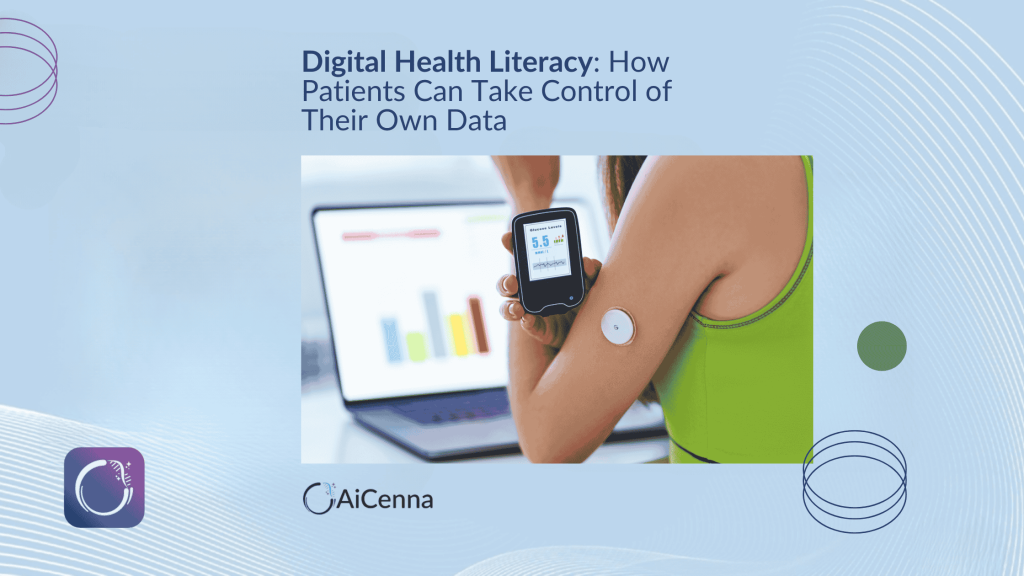
- Devices track heart rate, sleep, glucose, and more.
- Data overload can confuse patients without guidance.
Telemedicine
- Offers convenience but requires comfort with video platforms, secure messaging, and digital consent forms.
Online Health Information
- The internet is a double‑edged sword: a source of valuable knowledge but also misinformation.
(Reference: Pew Research Center, 2021 — “The Internet and Health.”)
Barriers to Digital Health Literacy
- Socioeconomic factors
- Limited access to smartphones, computers, or reliable internet.
- Cost barriers for devices and data plans.
- Age and generational gaps
- Older adults may be less familiar with digital tools.
- Yet they are often the ones managing multiple chronic conditions.
- Language and cultural barriers
- Many platforms are designed in English, limiting accessibility for non‑English speakers.
- Design complexity
- Interfaces often prioritize clinicians, not patients.
- Overuse of medical jargon reduces usability.
- Trust and privacy concerns
- Patients may hesitate to use digital tools if they fear data misuse.
(Reference: Journal of Medical Internet Research, 2022 — systematic review on digital health literacy barriers.)
Case Studies
- Patient portals: A study in Health Affairs (2019) found that while 90% of hospitals offered portals, only about 30% of patients used them regularly. Barriers included difficulty logging in, confusing layouts, and lack of perceived benefit.
- Wearables: Research in Lancet Digital Health (2020) showed that while wearables can improve physical activity, sustained engagement requires education and support.
- COVID‑19 telehealth surge: During the pandemic, telemedicine use skyrocketed. Patients with higher digital literacy adapted quickly, while others struggled with technology setup and communication.
Strategies to Improve Digital Health Literacy
For Patients
- Ask questions: Don’t hesitate to ask clinicians to explain digital results in plain language.
- Use trusted sources: Stick to government health sites (CDC, WHO, NHS) and peer‑reviewed journals.
- Practice with portals: Explore features like appointment scheduling, prescription refills, and secure messaging.
- Leverage community resources: Libraries, senior centers, and community health workers often provide digital literacy training.
For Healthcare Providers
- Simplify design: Use plain language, visual aids, and multilingual support.
- Offer training: Provide tutorials or workshops for patients.
- Integrate education: Make digital literacy part of routine care, not an afterthought.
For Policymakers
- Promote digital inclusion: Expand broadband access in underserved areas.
- Support equity: Subsidize devices or data plans for vulnerable populations.
- Set standards: Require usability testing and accessibility in digital health platforms.
(References: WHO, 2020; Institute of Medicine, 2012; Health Affairs, 2019.)
The Role of Trust and Privacy
Digital health literacy is not just about skills — it’s also about confidence. Patients must trust that their data is secure. Transparency about data use, clear consent processes, and strong privacy protections are essential to build that trust.
(Reference: Hastings Center Report, 2021.)
Looking Ahead
The future of digital health literacy may include:
- AI‑powered assistants that explain lab results in plain language.
- Gamified learning tools to teach patients how to use portals and apps.
- Personalized dashboards that highlight only the most relevant data.
- Integration with wearables to provide real‑time coaching.
(Reference: Nature Medicine, 2021 — digital health innovation review.)
Conclusion
Digital health literacy is the bridge between technology and better health outcomes. Without it, the benefits of EHRs, wearables, and telemedicine remain out of reach for many. With it, patients can take control of their data, engage in shared decision‑making, and move from passive recipients of care to active partners in their health journey.